

Last week I had dinner with the CEO of a very successful software company. He told me that 30% of all downtime for his products was caused by anti-virus software.
Given the sophistication of today's malware, it's clear that a new approach is needed to anti-virus software.
Intel introduced a virtualization component to their chipset a few years ago. When they acquired anti-virus company McAfee, they collaborated to leverage their "VT-x" chipset to catch advanced persistent threats and root kits, both of which run at the same privileged level as the typical anti-virus products. The VT-x chip enables a security monitoring process which runs at a low level in a very highly privileged status in the chip. It can monitor CPU and memory state changes and flag, quarantine or stop anything it sees as suspicious. All new Intel-based, Windows 7 machines include this capabilities. Here's a white paper about it.
For those of us who live in the trenches of information technology, malware and root kits are the bane of our desktop management staff because they cannot be cleaned with existing standard antivirus software and require re--imaging the machines.
Anti-virus on a chip that cannot be disabled by malware. That's cool!
Cool Technology of the Week


Shadow Ashtanga, dropping like flies, and moving to Idaho
This morning, I decided do my practice in what used to be my Buddhist prayer/practice room (for more details, see this post) instead of the living room, where I have been practicing for the last two months. I just felt that the prayer room seems to be quite a bit warmer than the living room, which might make for an easier practice (less internal heat to have to build up to get my system going).
Because the prayer room is smaller than the living room, the lighting from the ceiling light impacts my body at a more direct angle. Which means, among other things, that I could actually see my shadow on the wall as I moved through the Suryas. It's especially cool (not to mention ego-boosting) to be able to see my shadow lift its lower half cleanly off the ground in trini position, and then float and land neatly in Chaturanga. I even suspect that my shadow may actually look better than its owner (me) doing Ashtanga! For the record, I've never actually video-ed myself doing Ashtanga before. Which also means that I've never actually seen myself doing Ashtanga. Isn't it interesting that I'm never seen myself doing something which is so much a part of my daily life?
Practice on the whole was good today, if I ignore my rather uninspiring performance in Karandavasana. Tried the posture four times. Every single time, I missed my forearms/elbows, and dropped like a fly into seated padmasana (Ha! "Dropping like flies in Karandavasana"... sounds like a song or poem or book title :-)). But setting aside the uninspiring performance in Karandavasana, the rest of practice was great. The energy level was great, and I moved through the whole thing at a good clip; I did primary up to Baddha Konasana and second up to Karandavasana in about an hour and forty minutes. I know that the speed of one's practice is not the only indicator of the quality of the practice, but I really think there is something to be said for moving through the practice at a good clip. Builds heat, and also prevents one from over-thinking things. But maybe the downside is that if I had practiced at a slower pace, I would have had more energy to do a "better" Karandavasana; I can't help thinking that it may be easier to land Karandavasana (and eventually, come back up) if my breathing were a little slower. I don't know. We'll see what happens tomorrow.
In other news: I will be moving to Pocatello, Idaho in early January. A few days ago, I was offered a short-term teaching position at Idaho State, and decided to take it. It is not a tenure-track position (obviously), but the terms are, well, better than my present employment situation, so I decided to take it. Ah, the joys of not being on the tenure track...
Anyway, I just started looking online for apartments today, and basically getting myself into relocation mode. It's not exactly a small move, distance-wise: Pocatello is 16 hours from where I am presently at. I guess I'm lucky that I don't have a lot of stuff, so I won't have the problem of having to lug a whole truckload of things across the country. But I do have a few boxes of books (mostly works of philosophy and literature) that I would like to give away to anybody who would like to have them. If you live near where I am (Fargo, ND, and Moorhead, MN), and are interested in coming into the possession of a few (or more than a few) good books, please email me. Otherwise, I'll have to try to give them away to local used bookstores or my department or something.
Anyway, I know nothing about Idaho. The only people I know who are from Idaho are not even from this world:

we recommend you to buy some goods below for comfort, safety and ease of your yoga activities
Tools for Teachers
 |
| Image Source |
Here are a few of my current favorites.
Yoga for Healthy Aging
Unfortunately, I do not have a photographic memory or a background in healthcare. Now, I know the basics--the parts of the body and contraindications for poses that my teachers refer to again and again--but a lot of my anatomy and medical knowledge went out the window shortly after I got my teaching certificate.
The Yoga for Healthy Aging blog has been a godsend! It's written by a team of experienced yoga teachers, including medical doctors Baxter Bell and Timothy McCall. It has practical anatomy as it pertains to yoga as well as lots of new, fascinating yoga studies explained in a way that even someone with absolutely no medical knowledge can understand it. I love love LOVE that they have their posts labeled so when I need to reference something like arches of the feet or the shoulder joint, I can find all the posts pertaining to it in the navigation on the right hand side.
Teachasana
This is a website by yoga teachers for yoga teachers, founded by my friends Nancy Alder and Anna Guest-Jelley. There is lots of great information for teachers here--and it's great community. I love the marketing content written by the folks at Bizeebee. There's also a monthly challenge--something to focus your teaching energy on--as well as free online workshops, videos with tips on alignment, etc.
Jason Crandell Blog for YogaGlo
Jason Crandell is a teacher I want to be like when I grow up. He's clear, concise, and confident in his instructions. More importantly, he knows exactly what he wants his students to take away from each class whether it's attention to a particular movement or a yogic concept. In his blog for YogaGlo he shares his secrets.
Yoga Journal Teachers Channel
Its not always easy to to navigate, but if you're patient there's a wealth of knowledge here. Whether I'm looking for advice about a particular injury or medical condition, looking to clarify my communication, or want marketing ideas, I know I'll be able to find good advice written by a seasoned and experienced yoga teacher here.
What's your favorite yoga teaching resource?
we recommend you to buy some goods below for comfort, safety and ease of your yoga activities
Building Unity Farm - The Guinea Fowl Who Lost His Mojo

Last week, one of Guinea Fowl, named Piebald (because he's a patchy blend of black and white) flew into the male alpaca area which is guarded by our Great Pyrenees Mountain dogs, Bundle and Shiro. Normally our dogs ignore our birds, since the dogs have lived with the poultry for most of their lives. Piebald ran around the inside of the pasture fence and his fluttering attracted the dogs. They wanted to "play" with Piebald by "fetching" him. Within seconds of this happening, I ran to the pasture, body slammed the dogs to the ground with a sharp NO, indicating that eating a fellow citizen of Unity Farm is unacceptable behavior.
My wife picked up Piebald and began walking him back to the coop. A few of his tail feathers were missing, his head had a few spots of blood, and he looked a bit traumatized but otherwise intact. On the way back to the coop, he jumped from her hands and ran straight into the forest surrounding our farm. Kathy and I spent an hour looking for him to no avail. As darkness fell, we suspended our search.
The next morning he reappeared in the coop, looking out of sorts. That afternoon he disappeared again and spent the night in the forest.
The following day, he reappeared in the coop but his affect was very submissive. Previously Piebald was high on the pecking order. Now, he was being pecked at by his subordinates. He lost his mojo.
He spent the day running away from the other Guineas and losing various pecking order battles.
His wounds had healed and he was eating/drinking vigorously. He stayed in the coop overnight but slept with the chickens.
The next day he began cruising the property with the other guineas. He regained his upright posture and assertiveness.
Today he's been leading the pack once again, completely comfortable with being a leader of Guineas. He's regained his stature.
Every day is an adventure at Unity Farm. You never know what interpersonal dynamics will develop with the alpacas, llama, guineas, chickens, and dogs. You never know who will squabble, who will have an injury/illness, and who will develop new behaviors. If it wasn't for the rigors of being a CIO, I could spent the day watching the events of the barnyard - far more interesting than Fox News or CNN.
We've had life and death on the farm, sickness and health on the farm, joy and sorrow on the farm. At the moment, everyone is healthy, happy, and knows their place in the pecking order.
As we prepare for the Christmas on the farm, it's good that our citizens are all at peace in their community.
What cats can teach us about Karandavasana
What does an Ashtangi (more specifically, this Ashtangi) do on moon days? Watch asana videos, of course! Particularly videos of asanas that he is working on at the moment. Following Erica's suggestion in a comment she left on my recent Karandavasana impotence post, I decided to check out the following video of Sarah Dee practicing Karandavasana under the expert guidance of Lexter the cat. David (Garrigues) and Joy are the owners/parents of Lexter; I imagine Lexter must have absorbed much yogic wisdom from them, and decided to impart it to Sarah. Hmm... maybe I should also volunteer to cat-sit Lexter the next time David and Joy go to India? ;-)
Anyway, here's the video. Enjoy, and happy moon day!
we recommend you to buy some goods below for comfort, safety and ease of your yoga activities
Rethinking Remote Access
As I travel the country, I find that CIOs everywhere are struggling with BYOD in particular but remote access more generally. Who is responsible if
A personal unencrypted laptop with email containing personally identified/protected healthcare information is stolen? The CIO of the institution providing email takes accountability and reports the theft to appropriate government regulators.
An employee prints a web page on their home computer and patient data is discovered blowing around in a nearby dump? The CIO of the institution hosting the patient data is responsible.
An employee with a malware infected but encrypted smartphone accesses a web application and a keystroke logger sends the username/password to hackers in Asia who use it to send spam. The CIO is responsible for all the consequences.
Policy against using personal laptops, home desktops, and smartphones for processing of healthcare data is not sufficient. CIOs must use technology controls to mitigate risk of data loss.
For example, BIDMC has already used AciveSync to enforce encryption of every smartphone accessing our network and to deny access to those smartphones that do not support encryption.
Personal laptops and home desktops are much harder to control. Purchasing institutionally supported laptop/desktop devices for every user needing remote access would be cost prohibitive.
Rather than try to manage the home clients that have multiple varieties of hardware, operating systems, and third party apps, it's more practical to impose restrictions on who can access resources remotely, where they can access resources from, and what they can do (block downloads and printing). Solutions I've heard from industry experts include
1. ActiveSync as the only means of smartphone email access with a configuration to require encryption of client devices. Use Outlook Web Access as the only laptop email access method and close all other types of remote email access - WebDav, Web Exchange Services, and RPC over HTTPS, IMAP, POP
2. SSLVPN for all remote access to all applications (including web portals) with configuration settings to prevent remote downloads and printing
3. Citrix or Virtual Desktop Infrastructure, which typically does not persist data on local clients.
I've described security as a continuous improvement process - the journey is never done. I'm curious what you are doing to restrict remote access in a world of malware, BYOD, and enhanced regulatory enforcement. Comments are welcome!
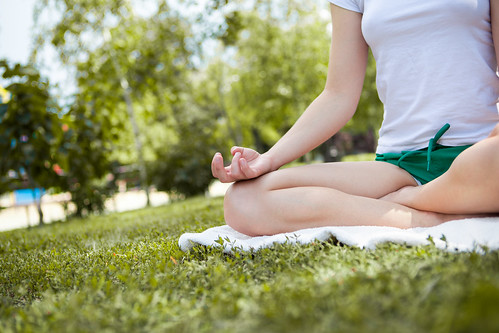
The Stinky Truth: Showering is for Suckers
 |
| Image via Flickr |
It's confession time.
I didn't take a shower yesterday. And you know what? I might be a lot stinkier in the days and weeks to come. Here's why.
I recently read an article about how meditation can help you become a better leader (and, frankly, a better person in general). It was written by someone who should know. A Harvard Business School professor... isn't that like the leader of the smartest leaders like.. anywhere? It's a great read--go ahead, see for yourself.
At this point you might be wondering what the heck this has to do with my lack of personal hygiene. Let me explain. I'm a work-from-home mom now, so I juggle my part-time writing work and a baby who sometimes demands more attention than I ever imagined could be possible. My little one is going through a phase (a phase that has lasted pretty much since she was born, except the week or two when she was a newborn and I was pretty sure she hated my guts) where she sleeps approximately 10 minutes when I put her down in her crib for a nap. After that she starts screaming. I go get her. She falls asleep in my arms again. Lather, rinse, repeat.
10 minutes. 10 precious minutes is all I have to do something for myself. In that time, I have a choice to make: I could do a little work. I could write a blog post. I could answer emails. I could shower. OR I could simply close my eyes and pay attention to my breath.
So if I have to be a little stinkier to be a better leader (a.k.a. better mom, better yoga teacher, better writer, and generally a better person) so be it! This is one of the many perks of staying at home--I can be stinky and no one has to know... unless I write about it on my blog... Don't judge me!
Smell ya later.*
*Direct quote from The Fresh Prince
we recommend you to buy some goods below for comfort, safety and ease of your yoga activities
Is "do your practice and all is coming" simply an accident of history?
Or more precisely, did Guruji say this because of the historical fact that his English was limited, and he couldn't verbally convey the full breadth of the yogic teachings to his western students? Guy Donahaye seems to think so. In an interview with Elise Espat, he says:
we recommend you to buy some goods below for comfort, safety and ease of your yoga activities
A Presentation to HIMSS in North Dakota
This morning, I joined a HIMSS group in North Dakota to discuss Meaningful Use Stage 2, Health Information Exchange, and Personal Health Records.
Here are the slides I used.
I was asked an interesting question about the transition from Stage 1 to Stage 2.
The Stage 2 Final Rule notes that as of 2014, any provider or hospital attesting to Stage 1 must use Stage 2 certified technology. Since the capabilities of Stage 2 certified technology are different than Stage 1, the nature of meaningful use changes for those who begin the program late.
The details of the changes to Stage 1 Core and Menu set objectives over time is summarized in this excerpt from the Stage 2 final rule.
A summary table of the effects is below, illustrating that the number of objectives changes as the certified technology changes. I hope you find this useful.
Stage 1 (2011-2012) | Stage 1 (2013) | Stage 1 (2014+) | |
Core | 15 | 13 | 13 |
Menu | 5 of 10 | 5 of 10 | 5 of 9 |
Stage 1 (2011-2012) | Stage 1 (2013 | Stage 1 (2014+) | |
Core | 14 | 12 | 11 |
Menu | 5 of 10 | 5 of 10 | 5 of 10 |
Karandavasana Impotence: Is there Viagra for Karandavasana?
Ha, I can't believe I'm actually stooping to using such provocative titles to attract readers; but as they say, it happens to the best of us (not to say I'm the best blogger or anything; just a manner of speaking...).
Anyway, during this morning's practice, I finally returned to working on Karandavasana after more than a year of not working on this posture. I had been quite successful in getting my feet into lotus in headstand over the last week, so I thought: Why not give Karandavasana a shot?
Well, I ended up giving the pose four shots this morning. Here's how the four tries went:
First try: Got into Pincha Mayurasana, got the feet into lotus, tried to land the knees on the elbows, but ended on landing in a seated padmasana.
Second try: Got into Pincha, and lost balance before I could even get my feet in lotus.
Third try: Same as second try.
At this point, a voice inside me was saying: Look, if you can't even get into lotus in the last two tries, you should probably call this a day. Your muscles are probably fatigued. Maybe try again tomorrow?
But the stubborn side of me prevailed over this voice, and I decided to give the pose one last try. So:
Fourth try: Got into Pincha, got the feet into lotus, and then... voila, my knees landed on my elbows with a little spring! At least, it kind of felt like my hips (or whatever) had springs in them, because when the knees touched the elbows, they felt like they were going to bounce off my elblows. But they stayed, and I landed the duck.
But the hard part was getting the lotus back up into the air from the elbows. It's a very strange feeling: It just feels like there is simply no "ground" to push off from. I don't know if this makes any sense, but in arm balances like Bakasana and Bhujapidasana (as well as in jumpbacks) there's always the ground to push off from, and you know that if you are going to get anywhere, you need to push away from the ground. Of course, anybody who has ever worked on arm balances would know that the whole picture is a bit more complicated than that, but nobody would disagree that pushing off the ground is the starting point of the arm balance. But with Karandavasana, at least for me, it feels like there's just nothing to push off from. So after staying with my knees on my elbows for five breaths, I simply lowered myself down to a seated lotus.
So I, ahem, couldn't get it up in Karandavasana today. I wonder if there is a Viagra for Karandavasana on the market yet?

we recommend you to buy some goods below for comfort, safety and ease of your yoga activities
Sweat and detoxification - a yoga mythbuster!

If you have been doing yoga for a while, you have probably at some point heard that one of the benefits of yoga (especially "hot" yoga) is that sweating detoxifies the body.
Now, I am not a biologist by any definition, but something in this has never quite rung true for me. Yes, we have all had our experiences with some of the more noxious secretions of the sweat glands, both on the mat and off, but is that really "detoxifying"? Well, I decided to do a little yoga mythbusting and find out! I apologise for not sourcing all the information below, but I am fairly sure that I have got the science right.
Myth No. 1: Sweat removes toxins from the body
Actually, it turns out that the main function of the sweat glands is to regulate body temperature. They do this by secreting what is basically water plus salt and electrolytes.
Science seems to contradict itself on whether or not sweat actually removes toxic elements from the body. Some studies seem to show that it is an important pathway for excreting certain trace metals like zinc and copper. Others suggest that the amounts of toxic substances such as heavy metals found in sweat are so small as to be irrelevant - less than 1%. The 99% are eliminated the good old fashioned way, via the digestive system.
The verdict? I guess this myth is not confirmed but not busted. Sweating may release some amount of toxins from your body, but not really enough to get excited about. But let's look at the second part of this myth.
Myth No. 2: Sweating more = greater detoxification
If sweat is an efficient way of detoxifying, then we would assume that the more we sweat, the more toxins our body releases. However, here is where the myth has got its biology upside down and backwards. The body has a highly effective system for detoxification: the liver and the kidneys, which filter toxins from our blood. These organs rely on a high level of hydration in order to function properly - if the body becomes too dehydrated, they can't function. In extreme circumstances, sweating too much can actually reduce detoxification if the body becomes dehydrated and the water you lose is not replenished.
So I think it's safe to say that this myth is: BUSTED! While you could argue that sweating a lot in yoga makes you drink more, which helps the liver and kidneys to detoxify the body, you don't actually need to sweat in order to drink more water. So, still BUSTED!
So what's the bottom line for detoxification?
Well, since the liver and kidneys are the critical organs for detoxification, the best things we can do to support the body's detoxification and increase our elimination of toxins are:
- Drink lots of water
- Eat a healthy, balanced diet
- Get enough sleep
- Stay healthy!
we recommend you to buy some goods below for comfort, safety and ease of your yoga activities
Fear and self-loathing in not-Las Vegas
I don't usually like writing confessional blog posts that border on throwing oneself a pity party, but I'll like to begin this post with a little confession: I suffer from self-loathing. At least, that's what Wikipedia says. I don't consciously hate myself, but I do experience feelings of dislike and antipathy towards people whom I see as belonging to groups that I either belong to or identify with. Wikipedia also tells me that such feelings may be associated with feelings of autophobia. I've no idea if this is true. In any case, I'm not going to try to use Wikipedia to self-diagnose. But I'm saying all this to give you some idea of where I'm coming from.
Here's a very recent example of this self-loathing/autophobia. First, a little background story. At the coffeeshop near my home that I do my work at, there's another regular, a young guy in his mid-twenties who started coming to this coffeeshop a couple of months ago, and whom I've spoken with a couple of times. He got a degree in accounting from a nice private Catholic university in the Midwest a couple of years ago, then decided that accounting really wasn't his thing. So he went on to get an MFA in creative writing, and he's now trying to bang out a screenplay while reading novels by contemporary writers (Jonathan Franzen, etc.) in his spare time. I've no idea what he does to pay his bills, nor do I want to know. Let's call this guy the Aspiring Screenwriter (AS).
After speaking with AS a couple of times, I consciously and unconsciously began to stop talking with him. Not in an aggressive or rude kind of way: I'd just come into the coffeeshop, get my coffee, greet him in a perfunctory kind of way, and then sit down in my little corner and start working on whatever I happen to be working on that particular day. Not all of this is motivated by self-loathing; I also have a certain aversion towards talking with people in a non-professional context about what I am working on (see this post for more details), because everybody seems to think that just because I work in bioethics, they have something authoritative and insightful to add to what I am doing, and frankly, I'm starting to find that very annoying. I am totally aware that I am probably adding to this stereotype that many have of professional philosophers as aloof people who walk around with their heads in the clouds and cannot relate to "ordinary" people. But well, it is what it is.
But I digress. Back to the main story. Yesterday, my fiancee and I were at the coffeeshop having coffee, and AS was sitting at the table next to ours, working on his screenplay. He saw us, and tried to make conversation. He asked me how my work was going. I replied, "It's going." And then I turned back to my coffee. But then I felt that since my fiancee was with me, and she had never met him before, it would be very rude not to at least introduce them. So I did. I also pointed out to my fiancee that he also used to live in Milwaukee, where we lived for a year. That started a pleasant conversation going between the three of us. We started by talking about our favorite places in Milwaukee. From there, we somehow drifted into talking about literature, and the influence and interactions between literature and religion and the ills of the twentieth century, like anti-semitism and the rise of Hitler.
I really enjoyed our impromptu and spontaneous conversation. At the same time, I also realized that what caused the conversation to be so enjoyable for me was also precisely what caused me to avoid speaking with him most of the time. I sense that we have a lot of things in common, but at the same time, I also have this prejudiced perception of writers and literary/creative types as flakes who talk a lot about stuff but never get stuff done. In a way, you could even say that much of my adult life has been spent trying to make myself into a different kind of flake: A flake who actually gets things done. I mean, think about it: How many flakes do you know get up at 4:30 a.m. five or six days a week to practice yoga? Or maybe the very idea of a flake who gets things done is an oxymoron. Which makes me a walking oxymoron. In any case, what I'm trying to say is this: My self-loathing self perceives the flake in others, which reminds of the flake that is in me. And this reminding makes me not want to have too much to do with people who remind me of the flake in myself. Does this make sense?
we recommend you to buy some goods below for comfort, safety and ease of your yoga activities
Building Unity Farm - Thanksgiving on the Farm

The entire family selected vegetables from the farm and surrounding farms, then spent the day peeling, chopping, and preparing a vegan feast. Just about everything but the Tofurkey was grown on the farm or within a mile of it. We had
Tofurky with roasted potatoes and carrots
Celery and chestnut stuffing
Rutabegas
Mashed potatoes
Green beans
Brussells sprouts
Squash
Pickles/onions
Sweet potatoes
A remarkable meal.
During dinner 30 turkeys dropped by the farm for a visit and roosted in the trees above our alpacas. It's clear to me that the best place for a turkey on Thanksgiving is a vegan/vegetarian farm!

Padmasana in headstand, Tandoori Turkey, James Bond; Is it possible to vicariously violate Ahimsa and Brahmacharya?
During this morning's practice, I decided, on the spur of the moment, to see if I could get into padmasana without using my hands in headstand (well, can you get into padmasana using your hands in headstand? :-)). What happened was, my body was itching to try Karandavasana again after laying off that infamous pose for more than a year. But I told myself to take it slow, and first see if I can get into padmasana in headstand first.
So I tried doing that, and it worked quite fabulously! My balance wobbled a bit in the first stage, which involves bringing the left extended leg way back to open the hips to accommodate the right foot into the left hip crease. But everything else went quite well after that, and I stayed in headstand padmasana for ten breaths. I think my hips have become more open over the last few months, because it didn't feel so easy the last time I tried padmasana in headstand, which was, I think, more than a year ago. So yeah, this is quite exciting. Maybe this means that Karandavasana is coming. Or not. We'll see.
Speaking of padmasana in headstand, Kino recently made a video about this. It's very helpful. Check it out:
we recommend you to buy some goods below for comfort, safety and ease of your yoga activities
